

Pediatric Anxiety: Identifying the Signs and Seeking Help
Recognizing anxiety in a child can be challenging, as it often masquerades as irritability, physical illness, or simple “growing pains.” At Julia Barriga MD, P.A., we understand that mental health is just as critical as physical health for your child’s overall development. Under the compassionate guidance of Dr. Julia Barriga, our team provides a safe, welcoming environment where families can discuss behavioral concerns without judgment. By identifying these struggles early, we can work together to build a foundation of resilience and emotional well-being for your little one. For more information, please contact us or request an appointment online. We are conveniently located at 5001 East Busch Blvd Tampa, FL 33617.
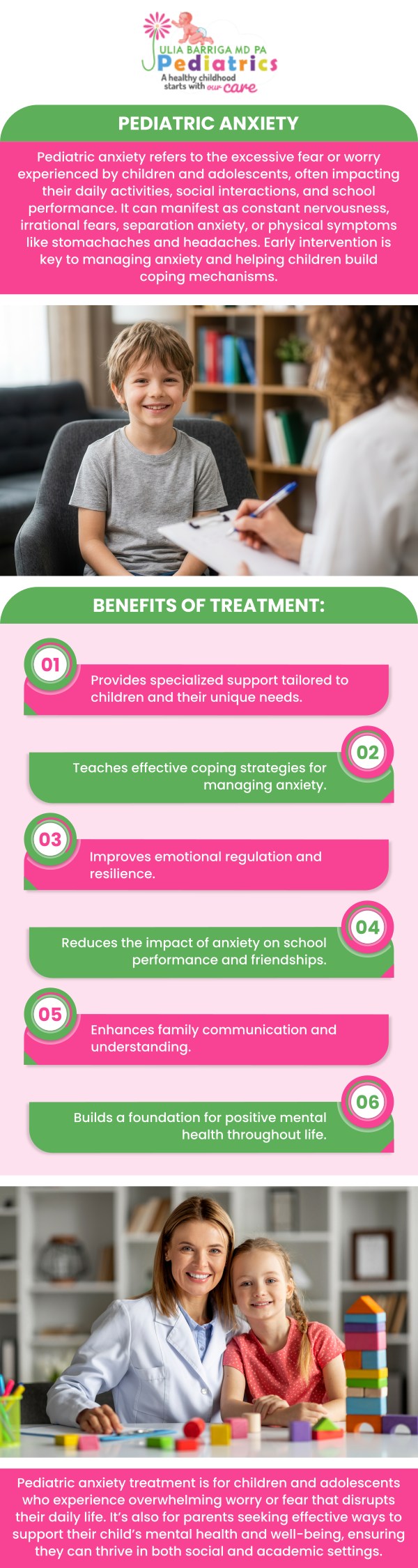
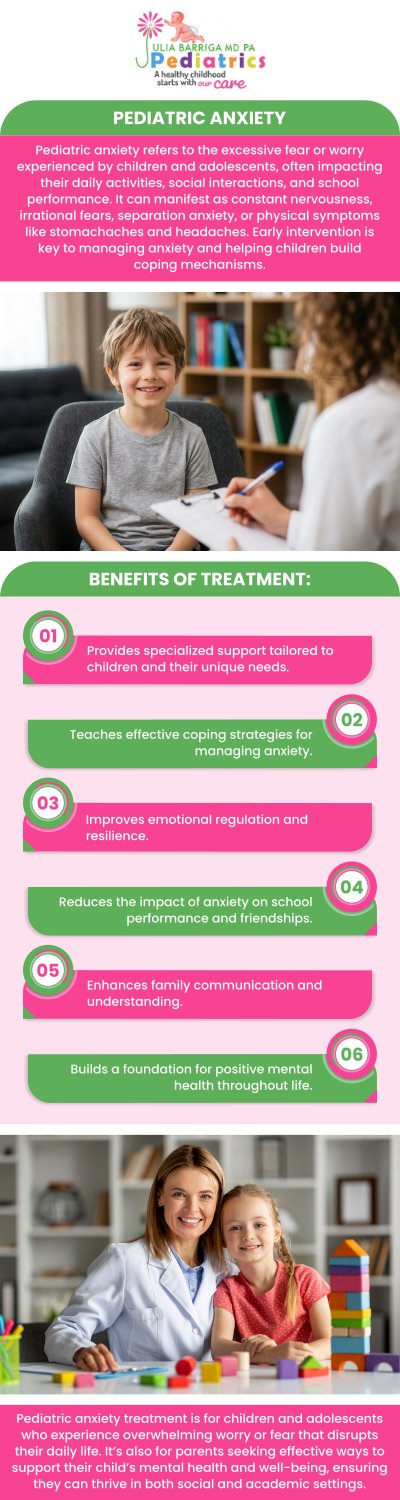
Table of Contents:
What role does a pediatrician play in diagnosing anxiety in children?
How can parents support their child with anxiety at home?
Are there specific behaviors that indicate a child is struggling with anxiety?
What are the long-term effects of untreated anxiety in children?
Cultivating Emotional Resilience: How Does Dr. Julia Barriga Approach Child Wellness?
A pediatrician is often the first line of defense in identifying pediatric anxiety. Because children frequently express emotional distress through physical symptoms—such as recurring stomachaches or headaches—parents typically turn to their primary doctor first. At Julia Barriga MD, P.A., we use these visits to conduct comprehensive screenings that differentiate between physical ailments and anxiety-driven somatization.
The pediatrician’s role involves gathering a thorough medical history, observing the child’s behavior during the exam, and using standardized screening tools to assess the severity of the anxiety. We act as the “hub” for your child’s care, ruling out underlying medical conditions (like thyroid issues or sleep apnea) that can mimic anxiety. Once a diagnosis is reached, the pediatrician coordinates a multi-disciplinary approach, which may include behavioral therapy referrals, school accommodations, and, when necessary, medication management, ensuring the child is supported from every angle.
While professional intervention is vital, the home environment plays a pivotal role in a child’s recovery. The most important thing a parent can do is validate their child’s feelings. Instead of saying, “There is nothing to be afraid of,” try saying, “I can see that you’re feeling scared right now, and I’m here to help you get through it.” Validation doesn’t mean agreeing that the danger is real, but rather acknowledging that the feeling is real.
Consistency and routine are also powerful tools for an anxious child. Predictability provides a sense of safety when the world feels overwhelming. Parents can also model healthy coping mechanisms; by showing your child how you manage your own stress—whether through deep breathing, exercise, or positive self-talk—you provide them with a tangible “toolbox” to use. Finally, avoid the temptation to help the child completely avoid their triggers. While it feels kind to let a child stay home from a party that scares them, avoidance actually reinforces the anxiety. Instead, work on “brave steps”—small, manageable exposures that build confidence over time.
Anxiety in children rarely looks like the “worry” we see in adults. Instead of expressing verbal concerns, children often manifest anxiety through behavioral shifts. Key indicators include:
• Physical Complaints: Frequent reports of nausea, butterflies in the stomach, or tension headaches, especially before school or social events.
• Avoidance: A sudden refusal to participate in activities they once enjoyed or an intense “clinging” to parents in situations that require independence.
• Sleep Disturbances: Difficulty falling asleep, frequent nightmares, or an inability to sleep alone.
• Irritability and Outbursts: Many parents are surprised to learn that anger is a common symptom of anxiety. When a child’s “fight or flight” response is triggered, they may lash out or have unexplained meltdowns.
• Perfectionism: An obsessive need to get things “just right” or an extreme fear of making mistakes can be a sign of high-functioning anxiety.
Leaving pediatric anxiety unaddressed can lead to a “snowball effect” as the child matures. In the short term, it can interfere with academic performance and the development of social skills, as the child is too preoccupied with their internal distress to focus on learning or making friends. Over time, untreated anxiety significantly increases the risk of developing clinical depression in adolescence and adulthood.
Furthermore, children who do not learn healthy ways to manage their anxiety may turn to maladaptive coping mechanisms later in life, such as substance abuse, to “self-medicate” their feelings of unease. Chronic anxiety also puts a physical strain on the body, potentially leading to long-term issues like hypertension or weakened immune function due to prolonged exposure to stress hormones like cortisol. Early intervention is not just about making the child feel better today; it is about preventing a lifelong struggle with mental health challenges.
Choosing a provider for your child’s mental health requires a blend of clinical expertise and a gentle, nurturing touch. Dr. Julia Barriga specializes in a holistic approach to pediatric care, viewing emotional milestones as vital signs of a child’s health. At our clinic, we don’t just treat symptoms; we treat the whole child. Our treatments range from developmental screenings and behavioral guidance to specialized referrals for cognitive-behavioral therapy. Dr. Julia Barriga takes the time to listen to parents’ concerns and empowers children with age-appropriate language to describe their feelings. By fostering a partnership between the doctor, the parent, and the child, we ensure that every patient has the tools to navigate life’s challenges with confidence and joy.
Every child deserves to feel safe and confident in their world. If you notice your child struggling with persistent worries or behavioral changes, don’t wait for them to “grow out of it.” Early support is the most effective way to ensure a bright, healthy future. For comprehensive pediatric care and compassionate guidance on mental wellness, visit Julia Barriga MD, P.A. today. Our team is here to support your family every step of the way. For more information, please contact us or request an appointment online. We are conveniently located at 5001 East Busch Blvd Tampa, FL 33617. We serve patients from Tampa FL, Terrace FL, Thonotosassa FL, Lutz FL, Greater Carrollwood FL, Lake Magdalene FL, Westchase FL, and Town ‘N’ Country FL.
Check Out Our 5 Star Reviews


Additional Services We Offer
- Dental Fluoride Varnish
- Newborn Care
- Vaccines/Immunizations
- Health Education & Counseling
- Physical Examinations
- Hearing & Vision Screening
- Management of Chronic Conditions
- Comprehensive Well Visits
- Asthma Management
- Diabetes Management
- ADD/ADHD Management
- Diagnostic Services
- Ear Piercing
- Prenatal Consults
- In House Lab Testing
- Get Acquainted Consults
- Covid Testing
- Flu Testing
- RSV Testing
- ECG
- Sports Physicals




 Send Text
 How May I Help You?